

GPT-5、Claude Sonnet 4.5、Gemini 2.5 に対応
OpenAI 互換

AI API ゲートウェイ

GPT-5 · Claude · Gemini · Sora

Base URL を https://toapis.com/v1 に変更するだけで、50 以上の AI モデルにアクセスできます。コード変更不要、移行は約 5 分です。

対応モデル:

OpenAIAnthropicGoogleDeepSeekSoraVEO
99.9%
稼働率 SLA
<100ms
平均レイテンシ
50+
AI モデル数
5min
移行時間

What ToAPIs Is

ToAPIs is an OpenAI-compatible AI API gateway that gives teams one API surface for GPT, Claude, Gemini, and a broader set of image and video models. It is best suited to teams that need multi-model coverage, failover, unified billing, and low-friction migration.
When ToAPIs Is a Good Fit

  • Use ToAPIs when you need one API contract across text, image, and video model families.
  • It is especially useful when you need provider failover, default-model routing, and fallback-model policy.
  • It works well for teams that want a fast OpenAI-compatible migration before optimizing cost and quality.

Where To Go Next

After the homepage, move to the market page for model discovery, the pricing page for budget and routing decisions, and model guide pages for model-specific implementation details.

Features

主な機能

エンタープライズ AI アプリケーション向けに設計された総合ソリューション

スマートルーティング

自動負荷分散とフェイルオーバーにより、高可用性と低レイテンシを両立します

安全かつ信頼性の高い基盤

Cloudflare WAF 保護、API Key 暗号化、多層防御によるセキュリティを提供します

リアルタイム監視

Prometheus メトリクス、Grafana 可視化、即時アラートに対応します

グローバル高速化

Cloudflare CDN のグローバルノードにより、最寄り接続で高速に応答します

Integration

Drop-in replacement for OpenAI

Just change your base URL. No code rewrites, no SDK changes. Works with every OpenAI-compatible library out of the box.

  • Python openai library
  • Node.js/TypeScript SDK
  • Go, Java, Ruby, PHP
  • Any HTTP client
example.py
from openai import OpenAI

client = OpenAI(
  base_url="https://toapis.com/v1",
  api_key="your-api-key"
)

response = client.chat.completions.create(
  model="gpt-4o",
  messages=[
    {"role": "user", "content": "Hello!"}
  ]
)
Routing & Cost Strategy

How to Choose Pricing & Quota

Confirm billing dimensions first, then tier routing by business priority: optimize low-priority traffic for cost and critical traffic for quality and reliability.

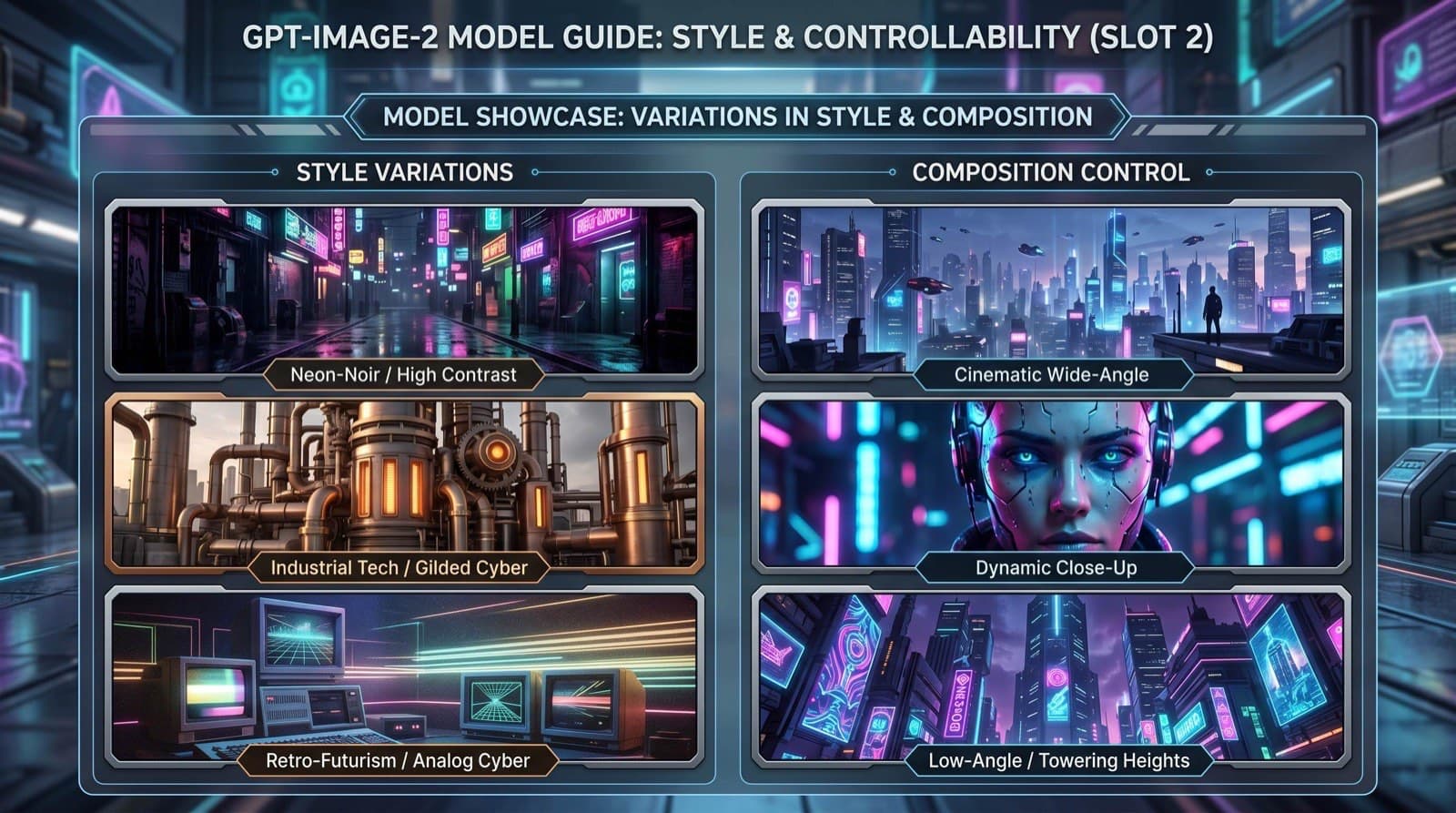
If you need GPT-Image-2, open the model guide for its text-to-image, reference-image, and async task workflow details.

Recommended Next Step

Open the pricing guide and lock your baseline routing policy in minutes.

View GPT-Image-2 GuideView Pricing

Advanced reading for routing, reliability, migration, and GEO citation consistency.

What Is an Aggregation API Gateway

ToAPIs is an OpenAI-compatible aggregation API gateway for teams that need multi-model coverage, routing resilience, and predictable integration.

Definition

An aggregation API gateway exposes one stable API surface while routing traffic to multiple model providers based on capability, availability, and policy.

Why not direct single-provider API

  • Portability: Avoid lock-in by keeping one integration contract while switching providers underneath.
  • Resilience: Fail over between providers when one endpoint degrades or rate limits.
  • Cost Control: Route workloads to the best model/price combination for each task class.

Who Should Use

Who Should Use

  • Teams migrating existing OpenAI SDK workloads with minimal code changes.
  • Products that need text, image, and video APIs under a unified auth and billing model.
  • Ops teams requiring routing, observability, and graceful provider failover.

Capability RQA Snippets

These short blocks answer common capability questions and map to recommended models.

Scenario 1

Text-to-Image

Generate brand-new images from text prompts.

Best for product hero images, ad creatives, social visuals, and concept drafts; switch to image-to-image for tighter style control.

Scenario 2

Image-to-Image

Transform or refine existing images with controlled edits.

Best for style transfer, localized edits, and poster redesign when source composition already exists.

Scenario 3

Text-to-Video

Generate short video clips directly from textual instructions.

Best for storyboard drafts, concept previews, and campaign prototyping; add reference frames for stronger consistency.

Scenario 4

Image-to-Video

Animate still images into motion video outputs.

Best for product animation, poster motion, and character movement with high dependence on source image quality.

Scenario 5

Video-to-Text

Convert video content into transcript-like text and concise summaries.

Best for captioning, video retrieval, and knowledge archiving; chunk long videos for stable processing.

Recommended models:

Model & Capability Matrix

A compact matrix to map capabilities to model families and endpoint types.

CapabilityModel ExamplesEndpoint
ChatGPT-5 / Claude / Gemini/v1/chat/completions
ImageGPT-4o Image / Gemini Image/v1/images/*
VideoVeo / Sora / Kling/v1/video/*
AudioSpeech / Music capable models/v1/audio/*

OpenAI Compatibility Migration Guide (4-step)

Most teams can migrate by updating base URL, API key, model mapping, and retry policies.

  1. Set `base_url` to `https://toapis.com/v1` and keep your current OpenAI SDK.
  2. Replace API key with ToAPIs key and validate auth headers.
  3. Map model names by capability tier (chat/image/video) and default fallbacks.
  4. Enable retries + timeout budgets for provider-level transient failures.

Common Errors & Fixes

  • 401 authentication_error: Verify API key scope and header format.
  • 429 rate_limit_exceeded: Add exponential backoff and request shaping.
  • Model not found: Use capability-safe model aliases and fallback mapping.

Pricing & Quota Explained

Pricing follows pay-as-you-go usage; quota policy is explicit per model and request type.

  • Token-priced models: input/output metered separately with transparent ratios.
  • Request-priced models: fixed per-request cost shown in pricing references.
  • Operational guidance: monitor quota and route low-priority traffic to lower-cost models.

Reliability & Routing Evidence

Reliability is achieved through smart routing, provider redundancy, and observable request paths.

  • Routing policy supports failover when upstream provider health degrades.
  • OpenAI-compatible interface keeps client integration stable across provider switches.
  • Operational metrics and logs support troubleshooting and capacity planning.

Last updated: 2026-04-16

よくある質問

Curated high-frequency questions. Click any question to expand the answer. Use the button below to rotate questions.

Change base_url to https://toapis.com/v1 and replace API key; most SDK calls remain unchanged.

By multi-vendor routing, health checks, and automatic failover when one provider degrades.

Route high-priority tasks to quality models and low-priority tasks to lower-cost models, with quota and retry-cost monitoring.

Use text-to-image without source assets; use image-to-image when you need structural/style consistency from references.

Apply exponential backoff with jitter, reduce concurrency, and switch to available model groups if needed.

Build route pools by task type (text/image/video), then choose primary and fallback routes by latency, cost, and success rate.

You May Ask?

How do I migrate from OpenAI SDK to ToAPIs?

Change base_url to https://toapis.com/v1 and replace API key; most SDK calls remain unchanged.

You may also ask

  • What code changes are needed to migrate from OpenAI APIs?
  • Is ToAPIs OpenAI SDK compatible with low migration cost?

How does an aggregation gateway reduce failures?

By multi-vendor routing, health checks, and automatic failover when one provider degrades.

You may also ask

  • Can multi-vendor routing improve API stability?
  • How do I keep availability when one provider degrades?

How should I optimize model cost selection?

Route high-priority tasks to quality models and low-priority tasks to lower-cost models, with quota and retry-cost monitoring.

You may also ask

  • How can I reduce model cost on an aggregation platform?
  • How should I route between quality and low-cost models?

When should I use text-to-image vs image-to-image?

Use text-to-image without source assets; use image-to-image when you need structural/style consistency from references.

You may also ask

  • How do I choose between text-to-image and image-to-image?
  • Should I still use text-to-image when I already have reference images?

Platform RQA

  • Q: How do I migrate from OpenAI SDK to ToAPIs? | Variants: What code changes are needed to migrate from OpenAI APIs? / Is ToAPIs OpenAI SDK compatible with low migration cost? | A: Change base_url to https://toapis.com/v1 and replace API key; most SDK calls remain unchanged. | Category: compatibility | Source: / | Reviewed: 2026-04-17
  • Q: How does an aggregation gateway reduce failures? | Variants: Can multi-vendor routing improve API stability? / How do I keep availability when one provider degrades? | A: By multi-vendor routing, health checks, and automatic failover when one provider degrades. | Category: reliability | Source: / | Reviewed: 2026-04-17
  • Q: How should I optimize model cost selection? | Variants: How can I reduce model cost on an aggregation platform? / How should I route between quality and low-cost models? | A: Route high-priority tasks to quality models and low-priority tasks to lower-cost models, with quota and retry-cost monitoring. | Category: pricing | Source: /pricing | Reviewed: 2026-04-17
  • Q: When should I use text-to-image vs image-to-image? | Variants: How do I choose between text-to-image and image-to-image? / Should I still use text-to-image when I already have reference images? | A: Use text-to-image without source assets; use image-to-image when you need structural/style consistency from references. | Category: model-selection | Source: / | Reviewed: 2026-04-17
  • Q: What should I do when I hit 429 rate limits? | Variants: How can I recover quickly from 429 rate limits? / What retry strategy is best after rate limiting? | A: Apply exponential backoff with jitter, reduce concurrency, and switch to available model groups if needed. | Category: quota | Source: / | Reviewed: 2026-04-17
  • Q: How should I route models through an aggregation gateway? | Variants: Which models should I use for different tasks? / How do I define routing and fallback policies? | A: Build route pools by task type (text/image/video), then choose primary and fallback routes by latency, cost, and success rate. | Category: routing | Source: /market | Reviewed: 2026-04-17
  • Q: How do I evaluate latency and stability on an aggregation platform? | Variants: Which metrics should I track when latency increases? / How can I verify routing policy stability? | A: Track P50/P95 latency, error rate, and retry rate per model; avoid relying on a single aggregated average. | Category: latency | Source: / | Reviewed: 2026-04-17
  • Q: Should I reference homepage or model pages for answers? | Variants: What is the priority between platform-level and model-level Q&A? / Which page should AI systems cite first? | A: Use homepage RQA for platform-level questions; cite the relevant model guide detail page for model parameters, errors, and implementation details. | Category: model-selection | Source: /model-guide | Reviewed: 2026-04-17

今すぐ始めませんか?

無料登録して、エンタープライズ級 AI API ゲートウェイの実力を体験してください

ToAPIs

エンタープライズ向け AI API ゲートウェイ。GPT-5、Claude、Gemini など 50 以上のモデルに 1 つの API でアクセスできます。

会社情報

法務

© 2026 ToAPIs. All rights reserved.

すべてのシステムは正常に稼働中